 build
buildStart with the question, not the drawing.
A useful brief begins with a day in the space. Give the first version a question worth answering.
 Buildable editorial · 2 min read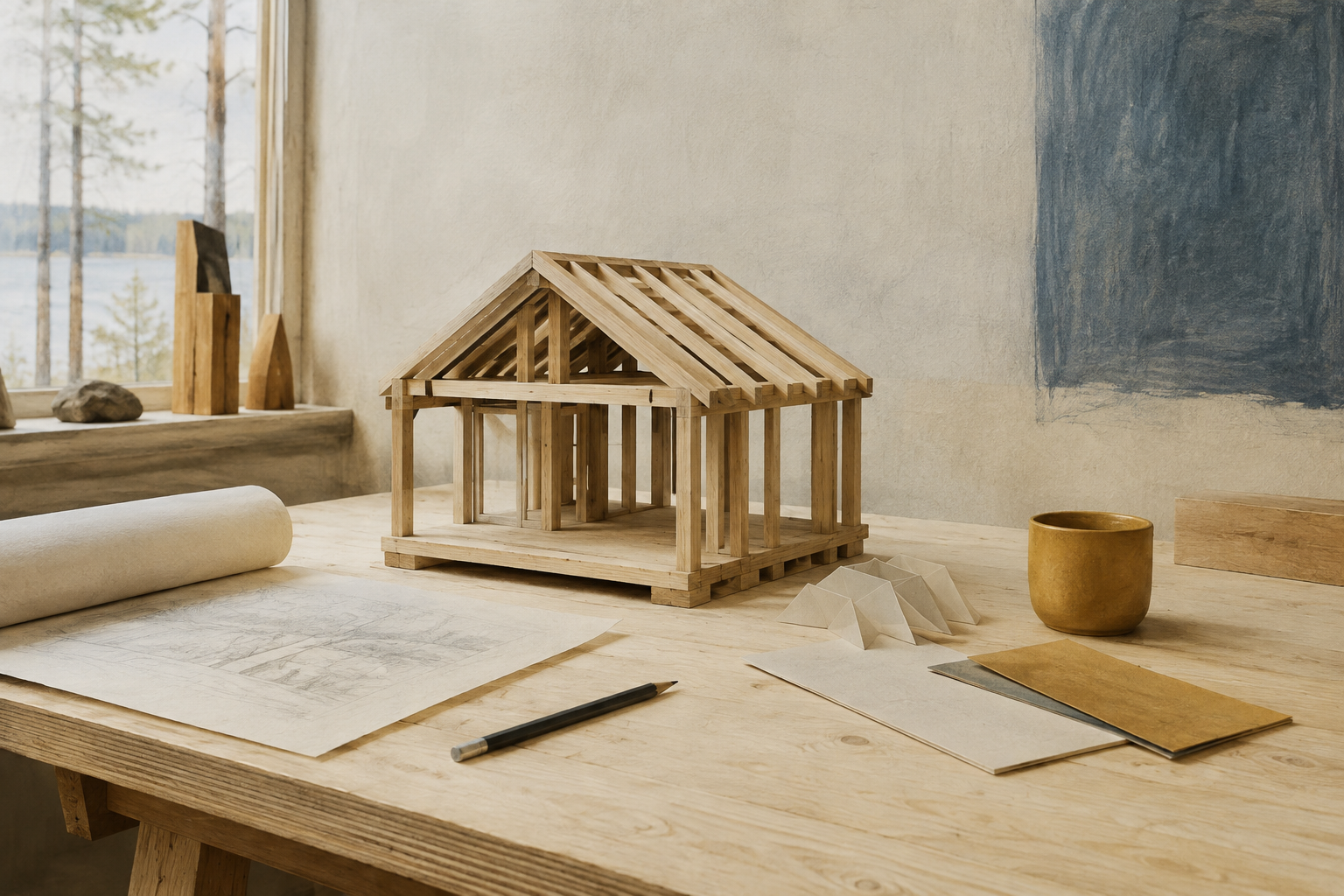
A useful design brief gives an idea something to push against. Before choosing a roof shape or a material, describe what a place needs to do.
Start with a day in the space
Think about the first hour of the morning. Where does the light enter? Who is already awake? Is this a place to concentrate, to gather, or to get away? A concrete scene often says more than a list of style words.
“Quiet” could mean a room away from the street, somewhere with a door, or a small building at the end of the garden. Those are different design problems. Naming the situation helps you choose between them.
Separate needs from possibilities
Write down the things that must hold: the intended use, the people, the site information you have, and the limits you already know. Then give your preferences their own space. A timber finish is a preference; fitting within a confirmed site boundary is a constraint.
Keep unknowns visible too. An unanswered question about access or ground conditions is useful information. It should become a task for the right person, rather than disappear inside a polished image.
Give the first version a small job
The first concept does not need to answer everything. It might test a footprint, compare proportions, or give a colleague something concrete to respond to. Decide what you want to learn before judging the result.
In Buildable today, the kit-house concept helps explore a frame envelope. Openings, room layouts, foundations and construction details still need further design. Use the model for the questions it can answer, and keep the others in the brief.
Carry the reason into the next revision
When you change something, record why. “Make it wider” is a request. “Make it wider so two people can work side by side” is a design intention that can survive several iterations.
A good brief is not a perfect document written at the beginning. It is a shared understanding that becomes more precise as you work.